
Nigeria and China have signed a 200 million yuan (about $30 million) grant agreement to finance community-based development projects, as both countries seek to deepen economic cooperation and improve living conditions across Nigeria.
The agreement is expected to support small-scale projects that address specific community needs, improve livelihoods, and create economic opportunities, particularly at the grassroots.
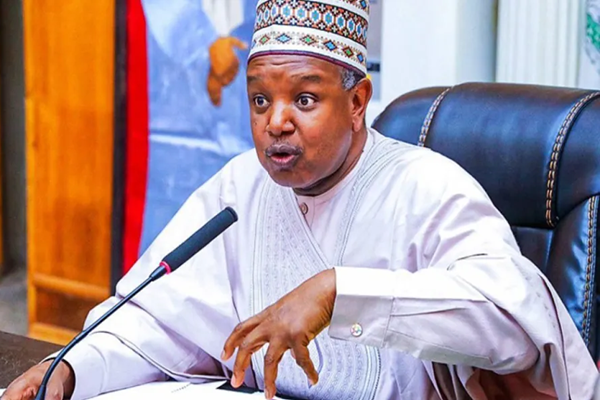
The Minister of Budget and Economic Planning, Senator Abubakar Atiku Bagudu, who spoke at the signing ceremony in Abuja, said the grant would strengthen the existing partnership between the two countries and support Nigeria’s development priorities.
He said the government was determined to ensure that agreements with development partners translated into practical benefits for Nigerians rather than remain commitments on paper.
Bagudu described the partnership with China as an important platform for development cooperation, knowledge sharing and mutual understanding, while appreciating the Chinese Government for its continued support.
He also thanked the Chinese Ambassador to Nigeria, Yu Dunhai, and his delegation for their contributions to strengthening relations between the two countries.
The grant will fund projects under China’s ‘small but beautiful’ initiative, which focuses on relatively small investments that deliver direct, measurable benefits to local communities.
Bagudu said the agreement built on previous Chinese assistance to Nigeria, including a $1 million contribution made earlier in 2026 to strengthen the country’s capacity for technological advancement and knowledge development.
He said the Federal Government was working with the Nigeria-China Strategic Partnership Office to develop projects proposed by state governments, aimed at addressing specific development challenges at the community level.
According to him, the Renewed Hope Ward Development Plan is another important part of the government’s efforts to make development more inclusive and ensure that economic opportunities reach people across the country.
The initiative seeks to identify economic opportunities and map economically active individuals across Nigeria’s 8,809 wards to provide a clearer picture of local economic activities and development needs.
Bagudu expressed interest in sharing the initiative with the Chinese Government and learning from China’s experience in poverty reduction and community development.
He said Nigeria could benefit from China’s experience in creating economic opportunities, tackling poverty and improving the livelihoods of its people.
The minister also called for stronger cooperation in human capacity development, particularly through training opportunities for Nigerian public officials in China.
He said developing the skills of government officials and strengthening public institutions were important to ensuring that Nigeria could effectively implement its development programmes.
Beyond development assistance, Bagudu called for stronger trade and economic relations between the two countries, particularly through China’s zero-tariff policy for Nigerian exports.
The Chinese Ambassador, Yu Dunhai, described the grant agreement as a practical demonstration of his country’s commitment to Nigeria’s development and the strategic relationship between both nations.
He said the partnership was built on mutual trust, solidarity and a common desire to promote economic and social development.
Dunhai explained that the agreement aligned with the understanding reached between President Bola Tinubu and Chinese President Xi Jinping during their meeting in China, as well as the resolutions of the Fourth China-Nigeria Cooperation Forum held in Beijing.
He said the relationship between the two countries had continued to expand across different sectors since diplomatic relations were established 55 years ago.
The ambassador said the economic opportunities created by China’s zero-tariff policy for Nigerian exports, which took effect on May 1, 2026, could further strengthen trade, attract investment and support Nigeria’s industrial development.
According to him, bilateral trade between Nigeria and China reached $18 billion in the first half of 2026, while Nigeria’s exports to China increased by 80 per cent.
He said the policy offered Nigerian businesses greater access to the Chinese market and an opportunity to expand production, attract investors and increase the value of goods exported from the country.
Dunhai, however, warned that the current zero-tariff arrangement would expire on May 1, 2028, urging both countries to use the remaining period to establish a more permanent framework for economic cooperation.
He called for negotiations towards an Economic Development Partnership Agreement that would sustain the benefits of the tariff concession and provide a stronger foundation for long-term trade and investment relations.
The ambassador urged the Ministry of Budget and Economic Planning to work with the Federal Ministry of Industry, Trade and Investment to advance discussions on the proposed agreement.
He said a more sustainable arrangement would help both countries consolidate existing gains and expand opportunities for businesses and investors.
In her remarks, the Permanent Secretary of the ministry, Dr Deborah Odoh, thanked the Chinese Government and its diplomatic representatives for their continued support for Nigeria’s development efforts.
She described the grant as a demonstration of China’s confidence in the country’s development priorities and commended the officials and institutions that helped bring the agreement to a successful close.
Odoh particularly acknowledged the contributions of the ministry’s International Cooperation and Legal Departments, alongside other relevant ministries, departments and agencies.
The ministry said it would work with Chinese partners and other relevant institutions to ensure that the projects were implemented transparently and efficiently in accordance with the terms of the agreement.