
●Cargo volume hits 68.2m tonnes
Nigerian ports handled 2,300 ships in the first half of 2026, representing an increase of 148 vessels over the 2,152 ships recorded in the corresponding period of 2025.
The Nigerian Ports Authority (NPA), which disclosed this at a two-day training on Data-Driven Business and Maritime Reporting in Lagos on Wednesday, also revealed that cargo throughput rose by 12.2 per cent to 68.2 million metric tonnes, compared with 60.8 million metric tonnes recorded in the first half of last year.
In view of the growth in port activities, the Authority has urged maritime journalists to embrace data-driven reporting, emphasising that accurate interpretation of industry statistics is essential to understanding developments in the maritime sector, providing informed public discourse and strengthening confidence in Nigerian ports.
The General Manager, Corporate Affairs Division of NPA, Mr. Ikechukwu Onyemekara who gave the figures while delivering the opening remarks at the training organised in partnership with Premium Times Training Academy, said journalists must go beyond reporting figures to explaining the economic realities behind them.

He explained that accurate reporting could influence investment decisions, shipping line choices and the confidence of cargo owners, while unverified information could create unnecessary concerns about port operations and discourage businesses from using Nigerian ports.
According to him, Nigeria’s port industry recorded significant growth in 2025, with total cargo throughput increasing by 24.8 per cent from 103.6 million metric tonnes in 2024 to 129.3 million metric tonnes.
He further disclosed that Lekki Deep Sea Port accounted for nearly 40 per cent of total cargo throughput across Nigerian ports in the first half of 2026.
He noted that more than three-quarters of Lekki’s cargo traffic was linked to refinery operations, describing the development as an indication of how major industrial investments were reshaping the country’s trade flows.
Onyemekara also cited National Bureau of Statistics figures showing that Nigeria’s total merchandise trade stood at approximately N41.4 trillion in the second quarter of 2026, representing a 5.6 per cent increase over the corresponding period of 2025.
Speaking on the responsibility of the Authority, he explained that following the 2006 port concession, Nigeria adopted the landlord port model, under which the NPA owns and administers port land and waters, while private terminal operators handle cargo operations within their respective terminals.
“The Authority provides marine services, including pilotage, towage, dredging and navigational aids, maintains common-user facilities, monitors terminal operators and plans long-term port development,” he added.
He cautioned journalists against attributing every challenge in the port system to the NPA, explaining that cargo delays could arise from different points in the port logistics chain, including terminal operations, Customs examinations, documentation, truck movements and road infrastructure.
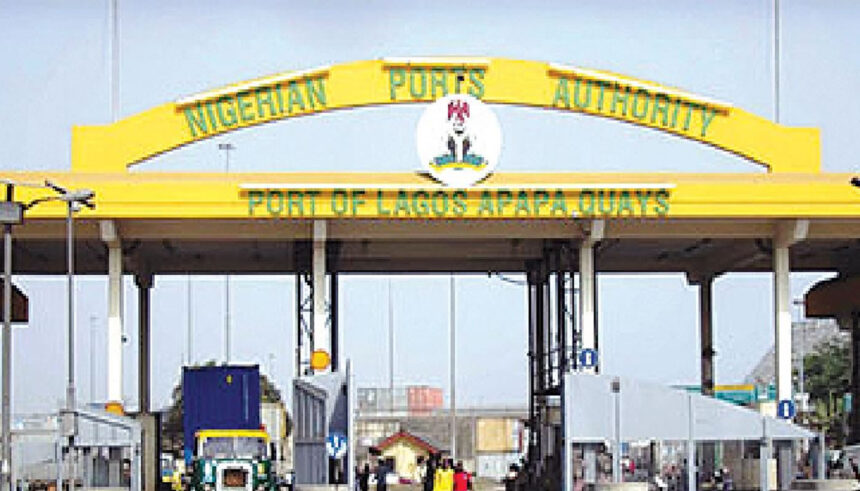
On ongoing developments, he disclosed that the Federal Government had secured £746 million in UK-backed financing for the modernisation of Lagos Port Complex, Apapa, and Tin Can Island Port.
He added that rehabilitation works were also ongoing at Onne, Warri and Calabar ports.
On digitalisation, he said the National Single Window, which commenced operations in March 2026, was designed to streamline trade documentation and payments across government agencies.
He also disclosed that the NPA was deploying a Port Community System with support from the International Maritime Organisation (IMO) to connect terminal operators, shipping lines, government agencies and freight forwarders.
The system, alongside the Eto electronic truck call-up platform, is expected to reduce paperwork, improve cargo movement and provide better operational data.
He urged journalists to consult primary sources, compare statistics with corresponding periods, provide the bases for percentages and give relevant stakeholders the opportunity to respond before publishing reports.
He stressed that the Authority was not seeking favourable media coverage but accurate reporting that would recognise its achievements while holding it accountable where necessary.