
By Obinna Odogwu
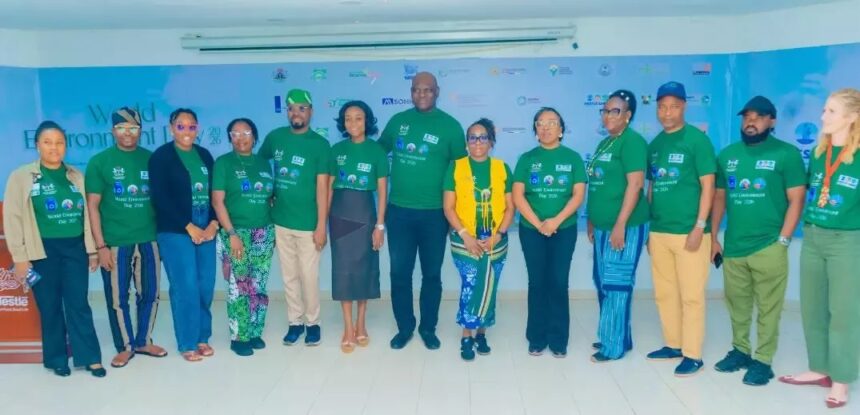
Environmental advocates, government officials, and development partners joined Nestlé Nigeria at its Lagos headquarters on June 5 to commemorate the 2026 World Environment Day, and also to mark the company’s seven years of environmental actions.
That day, the company also launched a multi-stakeholder coalition to drive sustained environmental actions targeted at protecting the country’s environment and making it safe for everyone.
At the event were the representatives of Federal Ministry of Environment, the National Environmental Standards and Regulations Enforcement Agency (NESREA), the Lagos State Ministry of Environment, and the Lagos State Waste Management Authority (LAWMA).
Others were stakeholders from industry platforms such as the National Plastics Action Partnership (NPAP), the Food and Beverage Recycling Alliance (FBRA), the Circular Economy Innovation Partnership (CEIP), and the Recyclers Association of Nigeria (RAN).
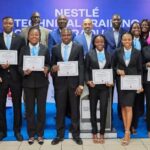
The initiative is supported by development partners, including the Swiss Consulate and the Kingdom of the Netherlands, implemented by the African Clean-Up Initiative, and amplified through a strategic media partnership with News Central.
Building on Nestlé Nigeria’s six years of nationwide awareness and clean-up initiatives, the coalition represents a coordinated and systems-led approach that brings together government, regulators, industry, recyclers, and development partners to advance circular economy outcomes.
The coalition resolved that the programme would be delivered across 12 locations nationwide through community sensitisation and clean-up activities.
The initiative, which focuses on advancing more sustainable and resilient communities, aims to reduce waste leakage, strengthen collection systems, and scale circular solutions through collective action.
It also aims to support environmental awareness, strengthen waste recovery efforts and promote responsible waste management practices in participating communities, thereby contributing to cleaner public spaces and reduced waste leakage into the environment.
The coalition reinforces Nestlé Nigeria’s commitment to plastics neutrality and responsible packaging while supporting stronger waste recovery systems and deeper collaboration across the plastics value chain.
It also demonstrates a scalable model for public-private collaboration in addressing environmental challenges.
The Corporate Communications, Public Affairs and Sustainability Lead at Nestlé Nigeria, Victoria Uwadoka, while speaking at the launch, pointed out that the event was not simply an announcement or unveiling of the partnership, but actually a reflection of their shared purpose and collective ambition.
“It highlights what becomes possible when government, development partners, industry players and communities come together to address one of the most pressing challenges of our time which is environmental sustainability and responsible waste management”, she added.
Uwadoka argued that waste management outcomes improve when intervention shifts from awareness alone to shared accountability across the value chain.
“This coalition is designed to connect policy, infrastructure, community action, and market-based recovery systems in a way that can deliver more durable environmental results”, she posited.
Also speaking, Nestlé Nigeria’s Sustainability Manager, Chinwe Obi, expressed optimism that the gathering would help bring to life the vision and dream of the company on environmental sustainability.
“Beyond now, we will all be imputing, and I hope that we can, into what we possibly can achieve with this partnership. Our vision is that none of our packaging ends up in the landfill”, she said.
The Controller of Lagos Field Office, Federal Ministry of Environment, Olabimpe Adenaike, who represented the Minister of Environment, said that the initiative reflected a strong commitment to environmental sustainability, community development, and responsible environmental practices.
“It aligns with the ministry’s mandates of driving climate action and environmental safety to protect the world and the future generation”, he added.
The minister commended Nestlé Nigeria and its partners for advancing environmental awareness, waste reduction, and climate resilience through collaborative action.
“We encourage all Nigerians to support proper waste management, recycling, and sustainable living as we work together toward a cleaner, greener, and healthier nation”, he concluded.
The Special Adviser to Lagos State Governor on Climate Change and Circular Economy, Titilayo Oshodi, commended Nestlé for the initiative, saying that the government was proud of what it has been doing to protect the environment.
“We’re proud that you have called us into the room to join you to do this. Thank you all to all of the private sectors and all of the partners who have believed in this vision. Please let’s take it deeper; let’s make it stronger, let 2027 be a greater one for us”, Oshodi said.
The Director, Commercial and Communications at News Central, Rosemary Egabor-Afolahan, said: “We are really proud of the Nestlé brand because of the intentional steps they are taking to ensuring a cleaner and a healthier environment, and we as a news organisation that practice ethical and responsible journalism we always make sure that our platform will be made available to Nestlé.”
Nestlé Nigeria has, for over six years, worked with partners across the value chain to strengthen plastic waste recovery and advance circular economy outcomes.
The company said that since 2019, these collaborative efforts have helped to recover more than 60,000 metric tons of plastic for recycling through partners such as Chanja Datti, Wecyclers, and MECOM, helping to divert significant volumes of plastic waste from the environment and back into productive uses.
Internally, Nestlé Nigeria has also promoted responsible waste management through its Employee Plastics Collection Scheme, which has recovered more than 12,000kg of plastic since 2022, reinforcing employee engagement and encouraging positive behavioural change.
Nestlé Nigeria’s earlier commitments to environmental sustainability
In July 2025, the company launched a comprehensive Safety, Health, and Environment (SHE) Training Programme, empowering 100 plastic waste workers across Lagos and Abuja as part of its ongoing commitment to environmental sustainability and social inclusion.
Nestlé said that the initiative was aimed at enhancing the safety and wellbeing of these invaluable workers while empowering them and promoting their dignity within the plastics recycling value chain.
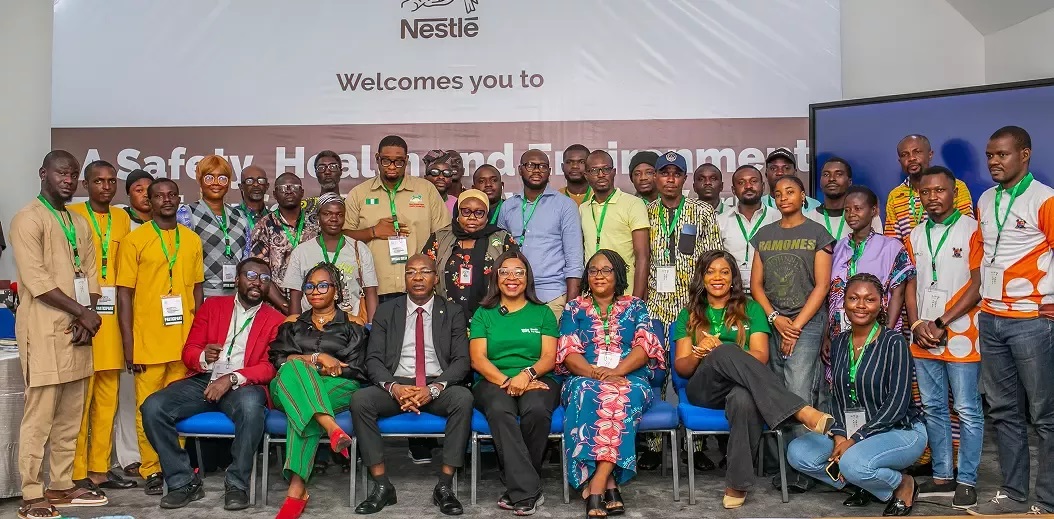
Supported by NESREA, RAN, and FBRA, the training encompassed essential topics such as best practices in occupational health and safety, responsible handling of recyclable materials, fire prevention and rescue techniques, and the proper use of personal protective equipment (PPE).
Each of the participants was also given PPE kits to ensure safer working conditions, fostering a healthier environment for both workers and their communities.
Speaking on the training programme, Uwadoka articulated the company’s motivation for the initiative, highlighting Nestlé’s commitment to building a waste-free future and the recognition of the role that the waste workers play in bringing the vision to life.
“At Nestlé, we are committed to building a waste-free future and recognize the crucial role plastic waste workers play in reducing pollution and facilitating a circular economy”, she said.
Uwadoka explained that the training was a vital component of the company’s support for the stakeholder group, enhancing Nigeria’s waste management infrastructure.
“By equipping these essential workers with the necessary skills and knowledge, we help to improve their quality of life while increasing their employability and boost productivity within a sustainable waste management framework.”
The Director General/Chief Executive Officer of NESREA, Prof. Innocent Barikor, at the event, praised Nestlé’s commitment towards environmental sustainability and for prioritizing the health and safety of those at the frontline of waste management.
“Waste workers are often unrecognized yet they play a crucial role in our national effort to combat plastic pollution in our environment”, he stated.
“The focus on training waste workers is commendable, especially at a time when the world is seeking solutions to the prevailing challenges relating to plastic waste management.”
The Managing Director of Maladase Ecopreneur Management Company Ltd, Engr. Mayowa Elefin, while responding on behalf of the trainees at the Lagos event, described the training as an impactful initiative which aligned with his organisation’s commitment to promoting a safe, healthy, and sustainable work environment across their plastic recycling value chain.
“It has provided valuable knowledge and practical skills that will greatly benefit our staff, enhancing their capacity to maintain safe operations, ensure healthier workplaces, and ultimately improve productivity”, Elefin stated.
He said that the initiative underscored the collective commitment of Nestlé Nigeria, NESREA, RAN, and FBRA to promote environmental sustainability and generate positive social impact.
“By ensuring that plastic waste workers acquire the skills necessary for healthier, more productive lives, we contribute to a more sustainable circular economy”, he added.
The SHE training programme, which was implemented by ImpactCrest Consulting, aligns seamlessly with Nestlé’s dedication to enhancing quality of life and fostering a healthier future for individuals and families, as well as the planet.
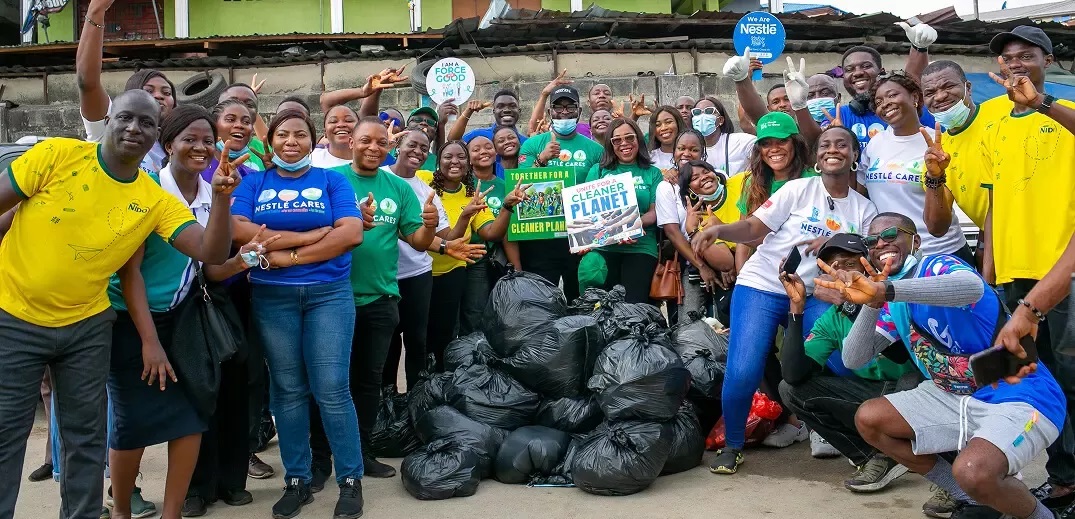
Before the July event, Nestlé had in June same year, launched a nationwide cleanup and community sensitisation campaign, reaffirming its commitment to environmental sustainability through it.
The initiative, executed in collaboration with African Clean-Up Initiative (ACI) and local authorities, mobilised a total of 516 Nestlé Cares volunteers from the Nestlé head office, branch offices, and factories.
Nestlé Cares is Nestle’s employee volunteering platform reflecting Nestlé’s commitment to environmental and social responsibility by engaging employees in community volunteerism. Through various projects, Nestlé Cares empowers employees to make a positive impact in their local communities.
The clean-up efforts spanned 11 cities, focusing on high-footfall market hubs such as Oke-Arin Market in Lagos, Utako Market in Abuja, Abubakar Rimi Market in Kano, Satellite Market in Jos, Sabo Market in Sagamu, Bodija Market in Ibadan, Okoko Market in Agbara, Abaji Market in Abaji, Holy Ghost Market in Enugu, Agu Awka Market in Awka and Mile 3 Market in Port Harcourt.
These locations were strategically selected based on their waste burden and community impact, resulting in the collective removal of 5,601 kilograms of solid and 379.2 kilograms of recyclable waste, highlighting the tangible results of corporate-community collaboration.
At the Lagos activation, Uwadoka, again, emphasized the alignment of this initiative with the World Environment Day theme: Curbing Plastic Pollution.
“At Nestlé, our commitment to fighting plastic waste is integral to our vision of a waste-free future. This vision encompasses internal accountability and proactive stakeholder engagement”, she said.
“Through strategic partnerships with the Food and Beverage Recycling Alliance (FBRA) and plastic waste recyclers such as Alef recycling, Wecyclers, Chanja Datti and Maladase Ecopreneurs Management Ltd. (MECOM), we are supporting the advancement of circularity within the plastics value chain.
She said that the company, through its Employee Plastics Collection Scheme (EPCS) launched in 2022, empowers its employees to take responsibility for their environmental impact by recycling their plastic waste.
“Through the EPCS, we have achieved diversion of 5,922kg of plastic waste from landfills. Collectively, our initiatives have successfully retrieved over 61,000 metric tons of plastic from the environment since 2019”, Uwadoka revealed.
Founder of the African Clean-Up Initiative, Dr. Alex Akhigbe, articulated the broader vision driving this partnership, explaining that the initiative transcended a mere clean-up exercise.
“It represents a sustainability movement grounded in the principles of collective responsibility, collaboration and the circular economy”, he said.
“The fight against plastic pollution requires deliberate action. Every bottle collected, every conversation initiated, contributes to shaping a culture of environmental consciousness. Our goal is to inspire a generation that values and protects our planet.”
This annual clean-up campaign demonstrates Nestlé Nigeria’s integrated approach to sustainability, merging operational accountability with grassroots engagement.
As the company progresses in its broader sustainability agenda, initiatives such as this serve as a model for how corporate actions can stimulate community-driven impact, reinforcing the shared responsibility to protect environmental resources today, and for future generations.
On June 5, 2024, Nestlé Nigeria employees under the global employee volunteer platform, Nestlé Cares, joined forces with volunteers from Convention for Business Integrity Innovations Nigeria Limited (CBiIL) to plant 1,000 trees at the Nestlé Dairy Demonstration Farm in Paikon-Kore grazing reserve, located in the Federal Capital Territory, Abuja, to mark that year’s World Environment Day.
The company said that the idea was to mitigate the impact of adverse weather conditions, explaining that one tree has the capacity to sequester about 20kg of carbon dioxide per annum.
It said that planting 1,000 trees would contribute to its broader global mission of achieving net-zero greenhouse gas (GHG) emissions by 2050.
Since its launch in Nigeria in 2019, Nestlé Cares has provided a platform for employees to give back to society by donating their time and talents to make a positive impact on individuals and families, on communities and the environment.
Nestlé employees have lived out their passion for caring for their communities and the planet through various projects including beach cleanup exercises, orphanage outreaches, market cleanup activities and mentorship programmes for the youth. The tree planting was a further demonstration of their commitment to building a sustainable future for all.
Director of Animal Husbandry Services, Federal Capital Territory Administration (FCTA), Hajia Umma Abubakar, expressed her support, saying that she was thrilled by the collaborative tree planting exercise.
“This initiative aligns perfectly with our vision for environmental conservation and demonstrates the power of collective action in building a sustainable future”, she stated.
“The trees planted today will not only reduce the impact of climate change but will also be beneficial for the livestock. We commend Nestlé Nigeria and its partners for their commitment to climate action and look forward to further collaborations in environmental conservation”, she added.
In September, 2021, over 200 Nestlé volunteers cleaned up seven markets across Nigeria to mark the World Clean-up Day that year, removing and properly disposing of over 3,000kg of waste from the environment.
The Managing Director/CEO of Nestlé Nigeria PLC, Wassim Elhusseini, while speaking at the exercise in Lagos where he joined his team, said: “At Nestlé Nigeria, we continue to take progressive steps on the journey towards ensuring a waste free future in line with our global commitment to preserving the environment.
“We are committed to leading lasting and impactful change in tackling waste pollution through initiatives like this clean-up exercise. We not only contribute to driving solutions by taking concrete action, but we also aim to raise awareness and promote behavioural change on proper waste management, beginning within our company.
“I am therefore happy to see over 200 Nestlé Cares volunteers joining the cleanup exercise in markets across Nigeria.”
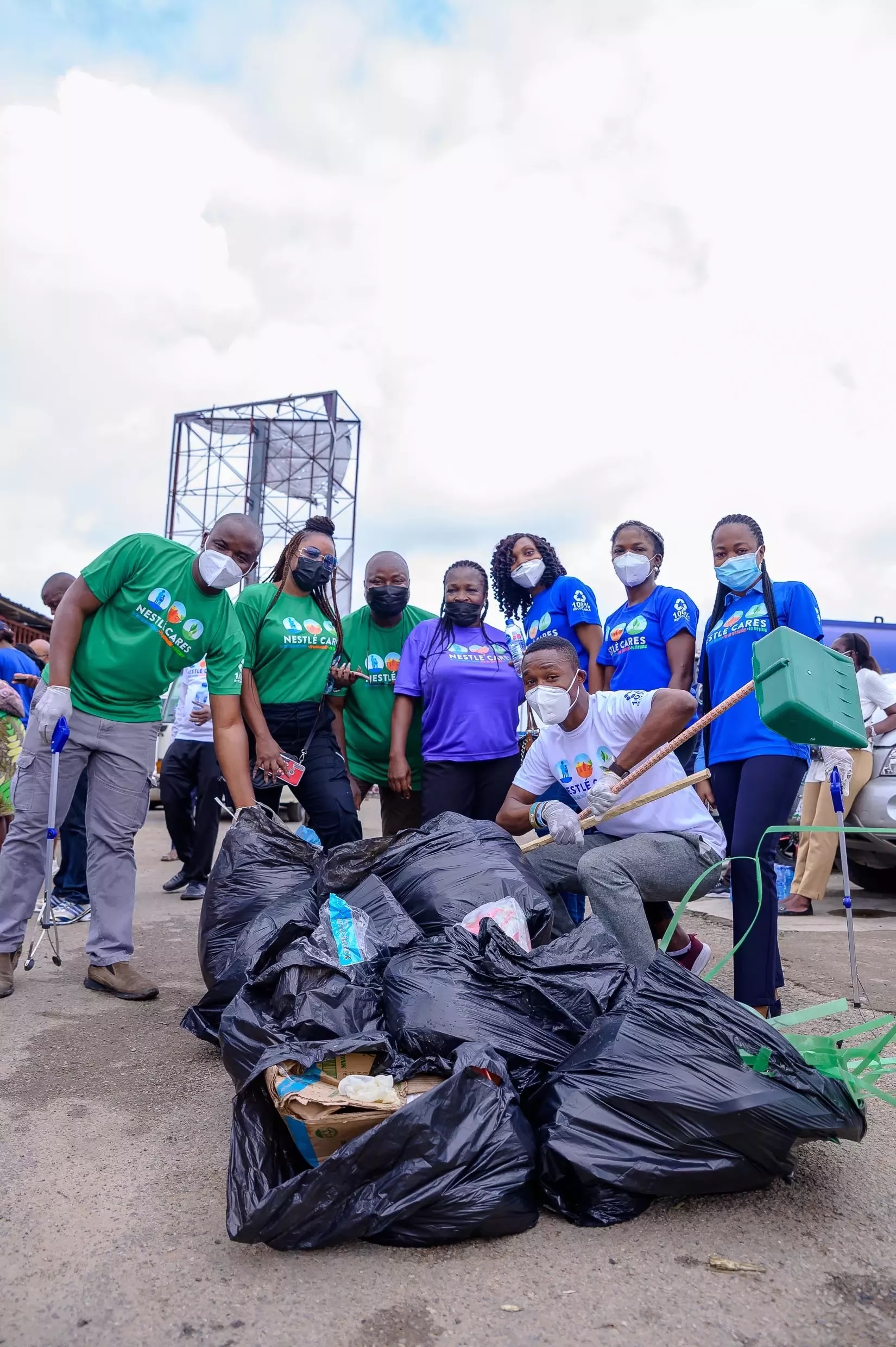
World Clean-up Day unites countries, communities and volunteers across the world for clean-up exercises, promoting the need for proper management of waste and raising global awareness and action for a cleaner planet.
The year 2021 made it the third year that Nestlé Nigeria is collaborating with other stakeholders and partners to take action to protect the environment.
Earlier in 2018, the company revealed that it was taking steps globally to promote environmental sustainability through well-orchestrated efforts based on three pillars:
The first is to phase out all non-recyclable or hard-to-recycle plastics and replace these with alternative materials that are recyclable or even biodegradable by 2025.
The second pillar is to achieve a waste-free future by driving projects to prevent further accumulation of plastics in the environment and also collaborating with stakeholders and organizations to achieve this.
The third pillar is driving behavioural change through education and awareness beginning within the organisation.
In 2020, the company also announced her global commitment to halve her greenhouse gas (GHG) emissions by 2030 and achieve net zero by 2050.
On June 23, 2021, Nestlé launched sustainability training for kids under its Nestlé for Healthier Kids (N4HK) programme.
The training, implemented in collaboration with the International Climate Change Development Initiative (ICCDI), was aimed at supporting the company’s vision to ensure that none of its packaging, including plastics, ends up in landfill or as littler, including in oceans, lakes or rivers. It was also part of its commitment to protect the planet for future generations.
Nestlé for Healthier Kids (N4HK) is the company’s flagship initiative which aims to help 50 million children globally lead healthier lives by 2030.
In Nigeria, N4HK incorporates a school-based nutrition education programme, which helps children imbibe healthy habits including good nutrition, active lifestyles through adequate physical activity, good hygiene practices and healthy hydration.
Speaking at the opening session at St. Paul’s Anglican School, Orile Imo, Obafemi Owode, Ogun State, Victoria Uwadoka said that part of the idea was to catch them young.
“Children must take an active part in ensuring a more sustainable approach to waste, and we are happy to help to prepare them for this important role”, she said.
“The Sustainability Training for Kids is specially designed to help children inculcate the right habits at an early age. We believe that the engaging, informative, yet fun filled approach will motivate them to care about sustainability while encouraging them to share the same passion with their families and friends.”
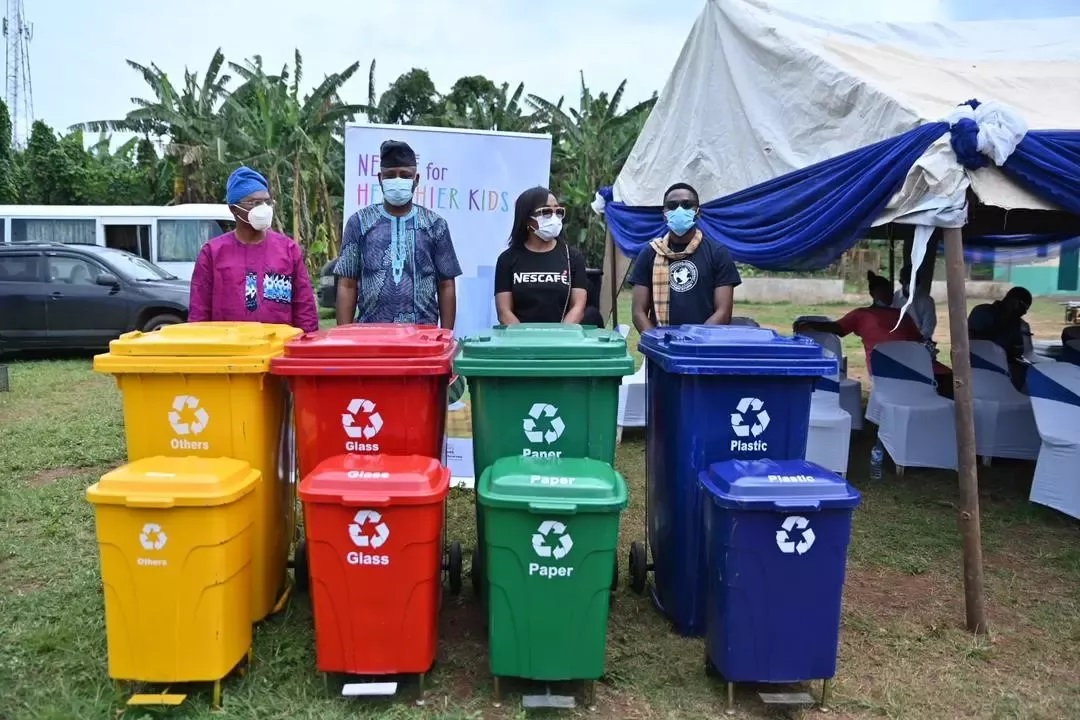
Founder of the ICCDI, Olumide Idowu, said: “We have a lot to learn about waste management and recycling to make the environment much safer. This is not just for us, but for the future generations. This is why this training is important to encourage children to do their part to save our planet.”
Also speaking at the event, the Board Secretary, Ogun State Universal Basic Education Board (SUBEB) at the time, Mr. Olalekan Kuye, said that SUBEB’s collaboration with Nestlé Nigeria had been mutually beneficial.
“I recall with special interest your interventions in the educational sector in Ogun State, especially through the Nestlé for Healthier Kids project which has contributed immensely to the wellbeing of our learners.
“Also, your intervention in the provision of toilet facilities and portable water for schools and communities is second to none and well appreciated”, he stated.
He said that that day’s programme provided yet another opportunity for all of them, especially the pupils, to learn new things about the environment, especially human activities that impact negatively on it as well as positive actions and attitudes towards improving the state of the environment.
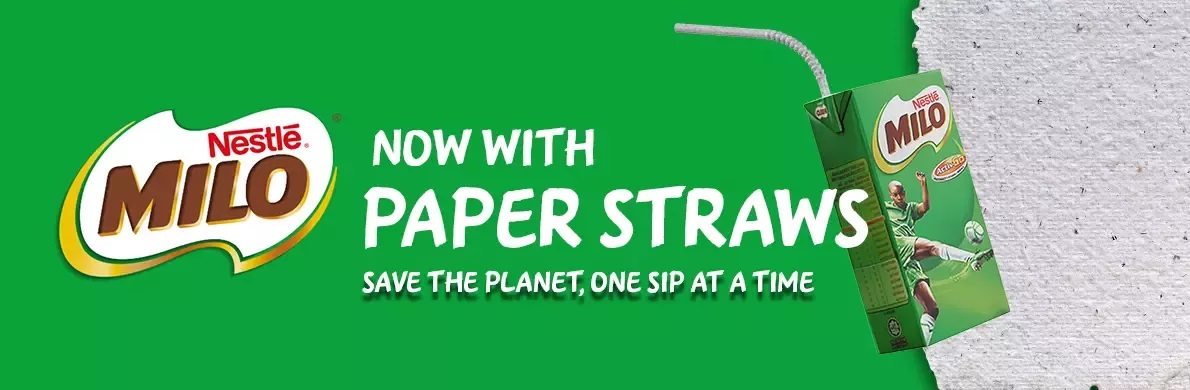
In February 2021, MILO switched from plastic to paper straws for its Ready-To-Drink (RTD) packs, a first of its kind in Nigeria in the beverage category.
Makers of the product, Nestlé, said that the aim was to eliminate 60 metric tons of plastic yearly. It said that the move was the company’s global commitment to make 100 per cent of Nestlé’s packaging recyclable or re-usable by 2025 to protect the environment.
The company said that the newly developed paper straws are 100 per cent biodegradable as well as safe and easy to use.
Speaking on the paper straws for MILO Ready-To-Drink (RTD), the MD/CEO for Nestlé Nigeria, Mr. Wassim Elhusseini, said: “We are proud to take this leading action to protect the environment.
“Transforming how we make, use, reuse and recycle our packaging plays an important role in the bold commitments we have made to reduce packaging waste and mitigate climate change.
“This is proof that Nestlé and other companies can be a force for good in society by providing products that are good for people and good for the planet,” Wassim stated.
Olutayo Olatunji, Category Manager, Beverages, Nigeria, said: “By introducing paper straws, MILO is shoulder-to-shoulder with consumers to improve our environment.”
As Nestlé Nigeria enters its seventh year of environmental stewardship, the 2026 initiative reflects a deliberate shift from standalone interventions to broader systems collaboration designed to deliver lasting environmental impact.